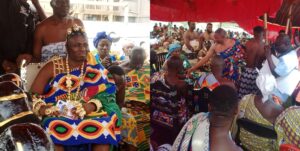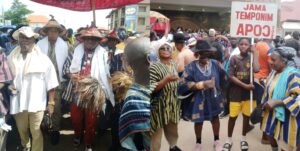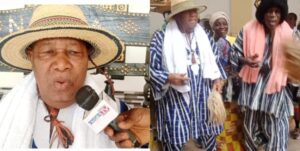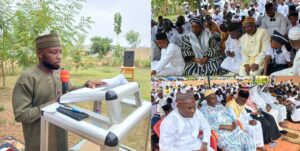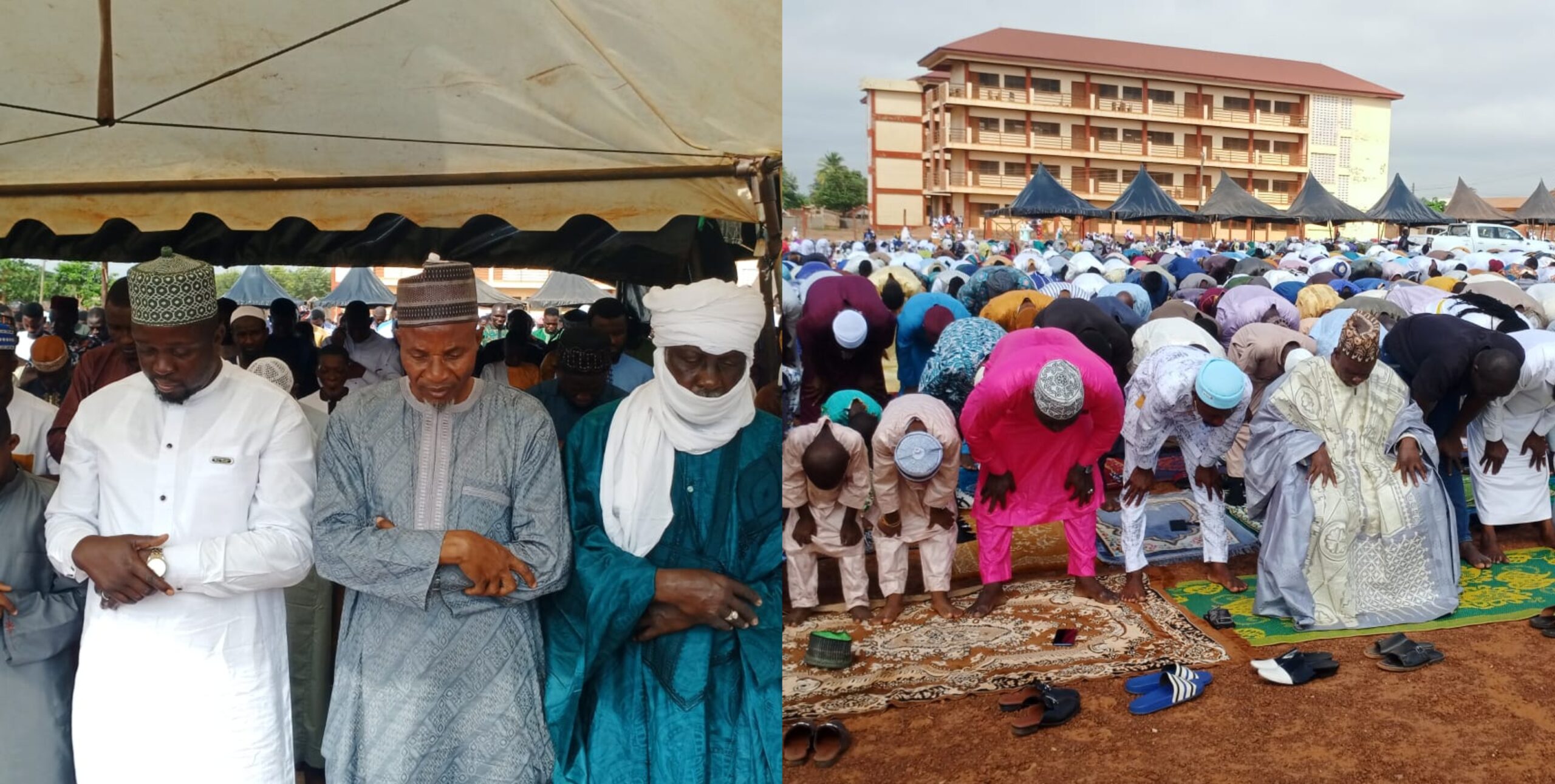
As global debates rage over conflicts involving Muslim-majority nations, Ghanaian Muslim leaders are spotlighting Islam’s core commitment to peace, education, and community welfare. Speaking after the joyous breaking of the 30-day Ramadan fast at Gyarko Park in the Bono East Region, prominent lawyer Alhaji Amadu Sulemana urged against stereotyping Muslims as hostile or aggressive.
In an exclusive interview with Nkyeremu News, Sulemana dismissed claims of inherent Muslim misconduct as “totally misleading and unacceptable.” He argued that bad actors exist in every society and should not be pinned solely on Muslims. “Most aggressive individuals in some Muslim communities are not true Muslims—they are illiterates who know nothing about the Quran,” he stressed. Sulemana pointed out perceived double standards, noting that U.S. and Israeli strikes on Iran would draw universal condemnation if reversed, yet aggressive sects like those nations wield deadly weapons without tangible justification. “Islam is for peace, not to attack, kill, or detain innocent people,” he affirmed. The event, led by the Deputy Chief Imam in prayer sessions, drew hundreds celebrating unity and reflection.
Sulemana’s remarks underscore how Ghanaian Muslims actively promote peace. Islamic teachings emphasise “Salaam,” peace, as a greeting and principle. Locally, the community shuns violence through interfaith dialogues and initiatives like the National Peace Council collaborations. During elections, Muslim leaders mediate disputes, fostering harmony in diverse areas like Bono East. Nationally, groups such as the Ghana Muslim Mission advocate non-violence, countering extremism with Quranic education on tolerance.
Beyond peace, Muslims drive education and health progress. Organisations like the Islamic Education Unit manage over 1,000 schools across Ghana, blending secular and religious curricula to uplift illiterate youth a direct response to Sulemana’s concerns. Scholarships from bodies like the Muslim Students Association of Ghana support thousands, boosting literacy in rural spots in general. In health, the community excels: During COVID-19, mosques served as vaccination hubs, while Ahmadiyya clinics offered free care in underserved regions. The Supreme Council for Islamic Affairs partners with the government on maternal health drives, reducing infant mortality. Ramadan itself highlights charity, with Zakat funds building clinics and wells in Bono and Bono East.
These efforts prove Islam’s peaceful ethos in action. As Ghana navigates its multicultural fabric, Muslim contributions ensure progress for all. Sulemana called for fair media portrayal: “Judge us by our deeds, not by distortions.”