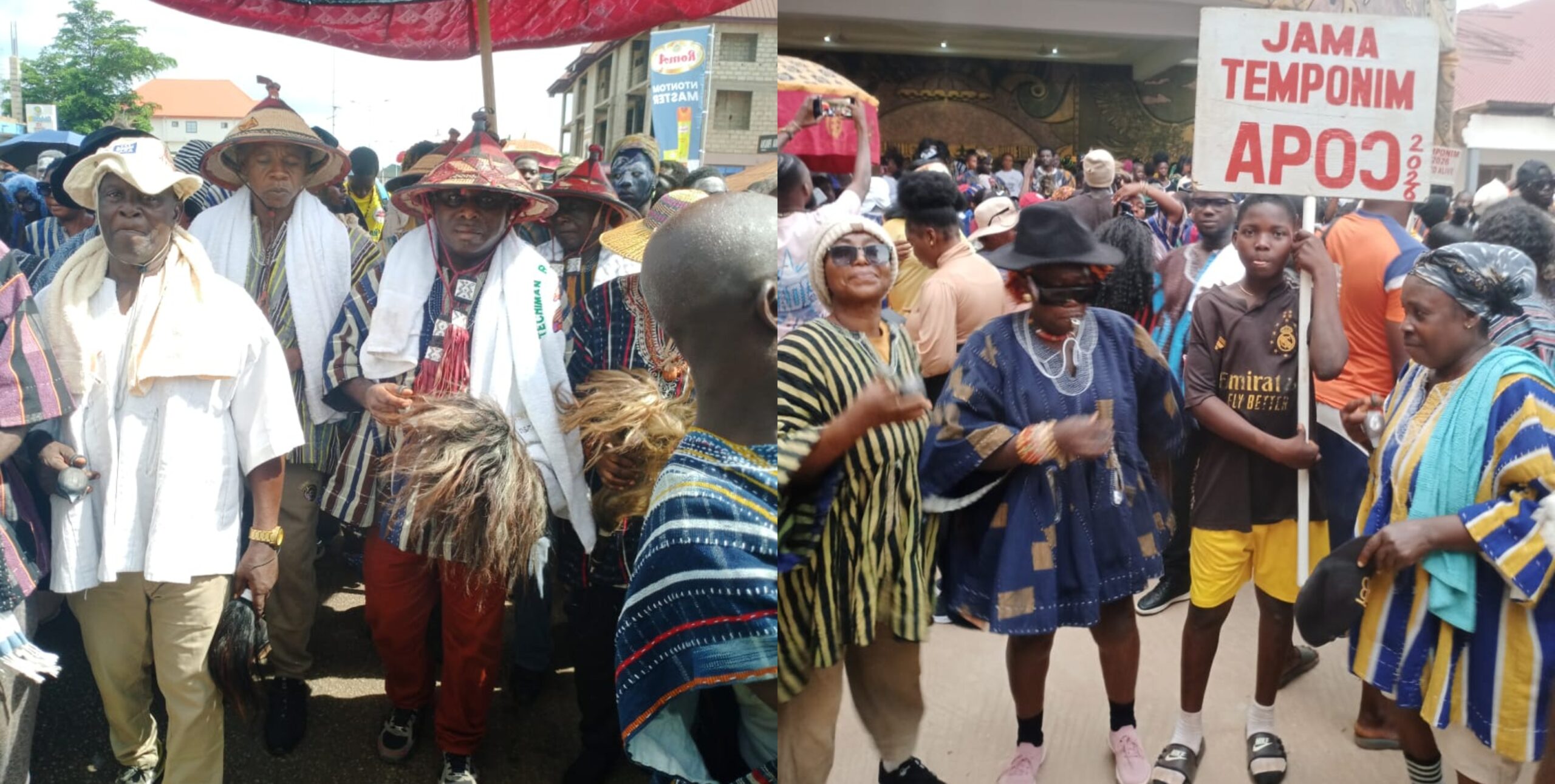
The Bronkyempem people of Techiman pulsed with energy last week as the Bamire community shook the streets with their infectious songs and masterful Apour dance performances. Led by Nana Bafour Asare, the chief of Bamire, and his enthusiastic followers, the event drew thousands of revellers who couldn’t resist joining the rhythmic celebrations. Among the prominent chiefs was Nana Opoku Gyeabour, the Mawirehene, whose presence added royal flair to the festivities, as captured by Nkyeremu News.
The climax unfolded on Monday at the Omanhene’s palace, where several chiefs converged for a grand gathering. Youths clamoured for an extension of the one-week event, lamenting that it ended too soon. The final day exploded into an all-night extravaganza, attended by over 120,000 people. Partiers danced until 3 a.m., when a traditional gun salute signalled the close, leaving memories etched in every participant’s heart.
Nana Owusu Gyare II, the Akwamuhehenfo of Techiman, shared profound insights off-camera. He explained that Apour symbolises the planting season in the agrarian calendar of the Techiman Traditional Area, contrasting with the Yam Festival, which marks the harvest. “It’s a time for our people to reflect on the authorities’ shortfalls and achievements,” he noted. Beyond accountability, Apour serves as a vital reset button: communities rest from laborious farm work, ignite business booms through vibrant markets selling crafts, foods, and attire, and indulge in pure entertainment via drumming, singing, and the signature Apour dance—a lively, acrobatic display mimicking planting motions with sticks and synchronised steps.
Rooted in Akan traditions, the Apour Festival, held annually around March or April, aligns with the onset of rains, invoking blessings for bountiful crops like yams, maize, and cassava. It fosters unity, as sub-chiefs from surrounding areas like Bamire and Mawire pledge solidarity. Elders perform libations to ancestral spirits, seeking fertility for the soil and harmony in the community. Women showcase elaborate kente wraps and headgear, while men don warrior-like smocks, turning the palace grounds into a cultural spectacle.
Economically, Apour turbocharges local trade; vendors report doubled sales from tourists flocking from Kumasi, Accra, and even the Ivory Coast. Socially, it strengthens family bonds through communal feasts of fufu, banku, and palm wine. In recent years, it’s evolved to address modern issues—youth forums discuss education and job creation, blending tradition with progress. As climate change disrupts farming, Apour’s rituals remind Techiman of resilience.
Nana Owusu Gyare II emphasised its enduring role: “Apour isn’t just dance; it’s our soul’s renewal, ensuring we plant not just seeds but seeds of peace and prosperity.” With crowds swelling yearly, Techiman’s Apour stands as a beacon of Ghanaian cultural vitality, promising even grander displays next season.
Takyi Johnson—Apour 2026